
From Practical Renovation to Patient-Centered Healing Space:
The Thanasas Family Dental Care Transformation
When Dr. Thanasas engaged Parabola Architecture + Development to modernize his practice while maintaining strong budget discipline, we delivered a successful fast-track, three-phase renovation. Working collaboratively within the owner’s parameters, we introduced foundational neuroscience-informed design strategies — balanced new lighting, with calming geometric forms, and improved spatial flow. We enhanced the patient experience and operational efficiency.
Project Overview
Thanasas Family Dental Care was completed in three phases:
Phase I: Demolition of the existing non-compliant ramp and full Michigan Barrier-Free accessibility upgrades.
Phase II: Complete parking lot replacement, new stormwater management system, and improved site circulation.
Phase III: Comprehensive exterior and interior building renovation, including updated clinical layout and patient-facing environments.
Scope of Work
As Architect of Record, Parabola A+D provided complete Pre-Design, Conceptual Design, Design Development, and Construction Document Phases, and coordination across all three phases. Our responsibilities included:
Interior and exterior renovation architecture
Floor plan design and dental equipment layout coordination (in collaboration with the dental equipment supplier)
Lighting design
Accessibility improvements
Site circulation strategy and coordination with civil engineering and landscape architecture
Overall design and implementation strategy
NOTE: Interior finishes were completed by the contractor’s interior designer. As a result, the final built interiors followed a different aesthetic direction than the one developed in our renderings and design intent.
Results
The completed renovation has contributed to the continued growth and success of the practice.
Patients now experience a more welcoming and calming space, while the updated layout supports smoother daily operations. This project demonstrated how strategic design decisions — even within defined constraints — can positively impact patient comfort, staff workflow, and the long-term value of the real estate asset.
We are deeply grateful to Dr. Thanasas for the opportunity to contribute to his practice and for the meaningful lessons this project provided.
-
Highly Efficient Periodontal Office Design Accommodates Future Expansion
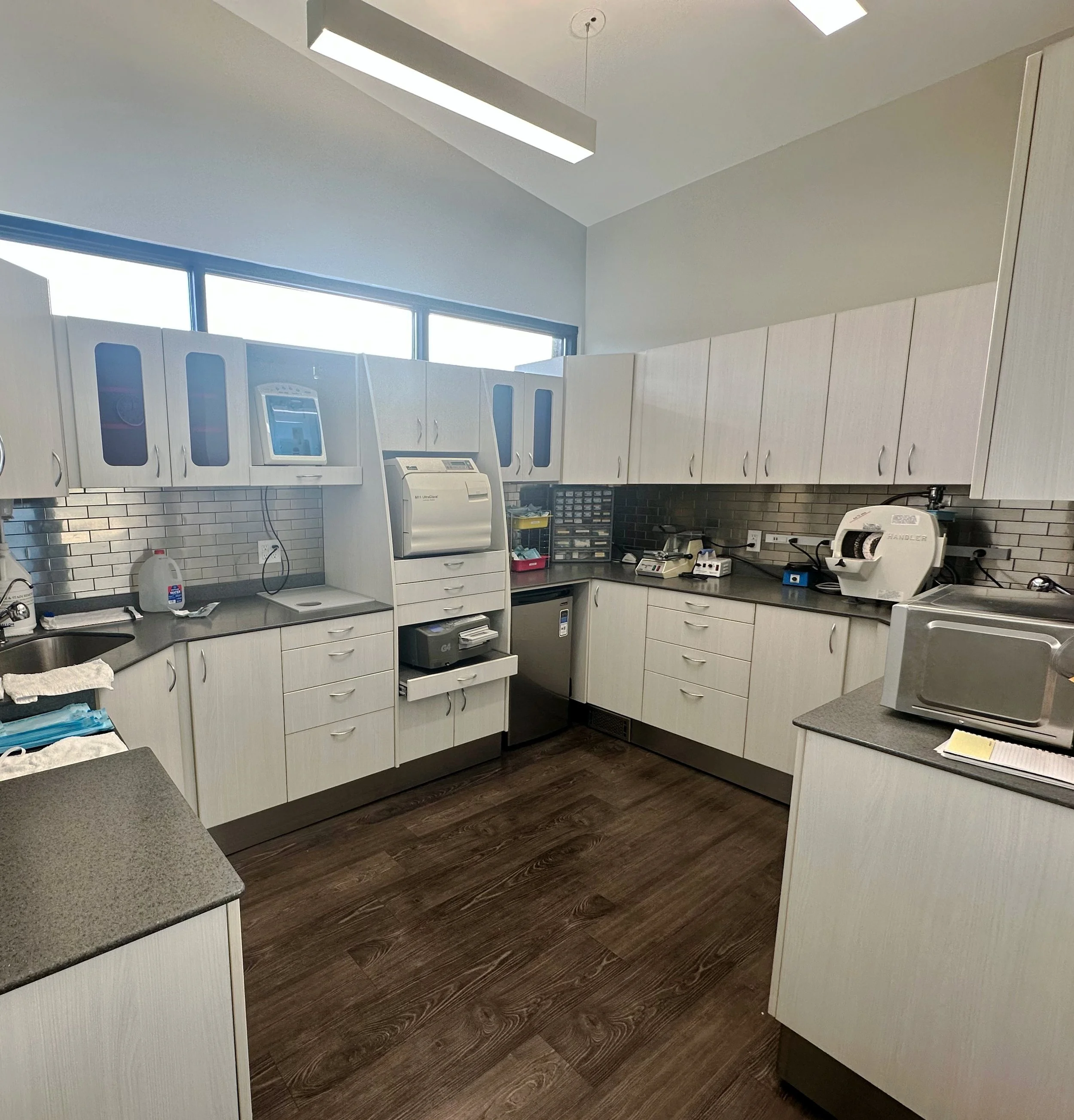
The efficiently designed periodontal office is located on the main floor. Two Surgical Suites and (4) Hygiene Operatories are strategically positioned along the North side of the building to provide optimal natural daylighting benefits. The Sterilization Area is centrally located for easy access for all Operatories and Surgical Suites.
Surgical Suites (3 & 4) are designed for future use. The areas are pre-plumbed from the floor below, and currently accommodate a Staff Lounge and Dr. Zahn’s Private Office & Restroom. As Dr. Zahn’s business model expands, minor renovation will be required to build-out Surgical Suites (3 & 4) without requiring building expansion or additional parking.
-
The interior building area = ____ square feet. A challenging space to implement all program requirements.
Exterior Transformation — Enhanced Exterior Elevations, Materials, and Barrier-Free Access
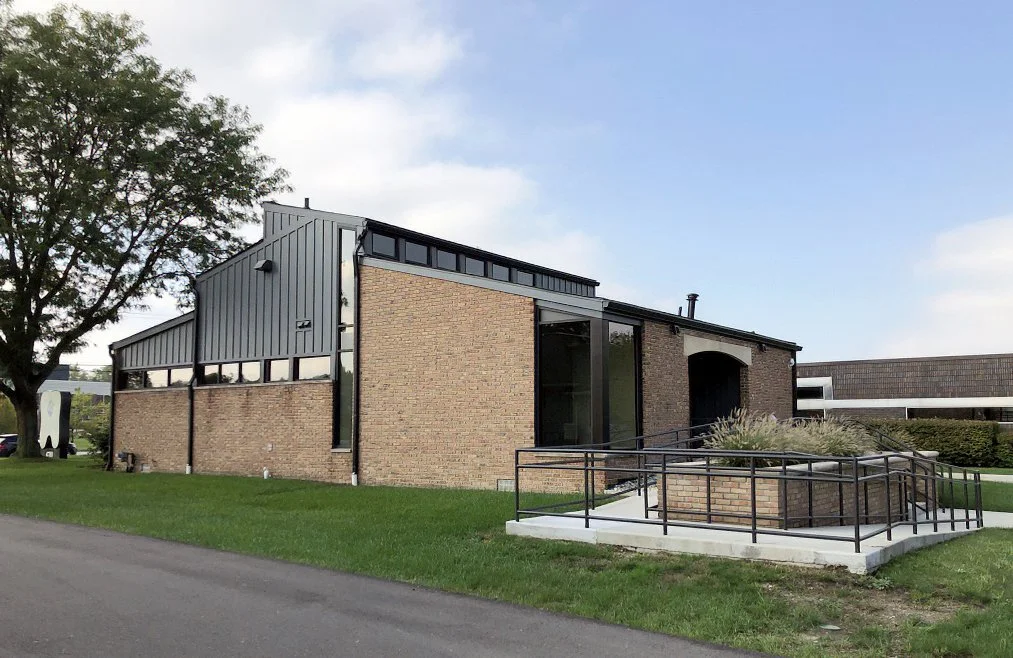
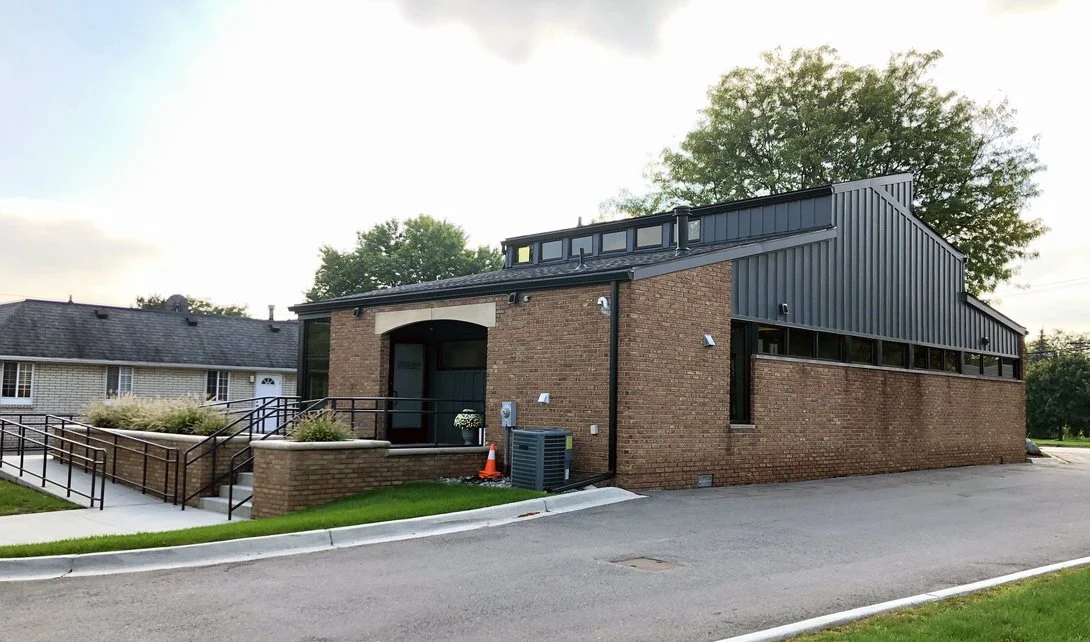
The exterior renovation transformed the building’s presence while respecting the original structure.
Key updates included:
New James Hardie vertical siding in a modern dark gray finish
New asphalt shingle roof
New energy-efficient, operable windows to enhance natural ventilation with clean, dark frames
Redesigned main building entrance by removal of security gate to provide a welcoming new building entrance for patients and staff.
The existing curved ramp was removed and replaced with a new Michigan Barrier-Free compliant ramp featuring integrated planters. These changes create a stronger, more contemporary architectural expression that better aligns with the overall building form and improves both functionality and curb appeal.
-
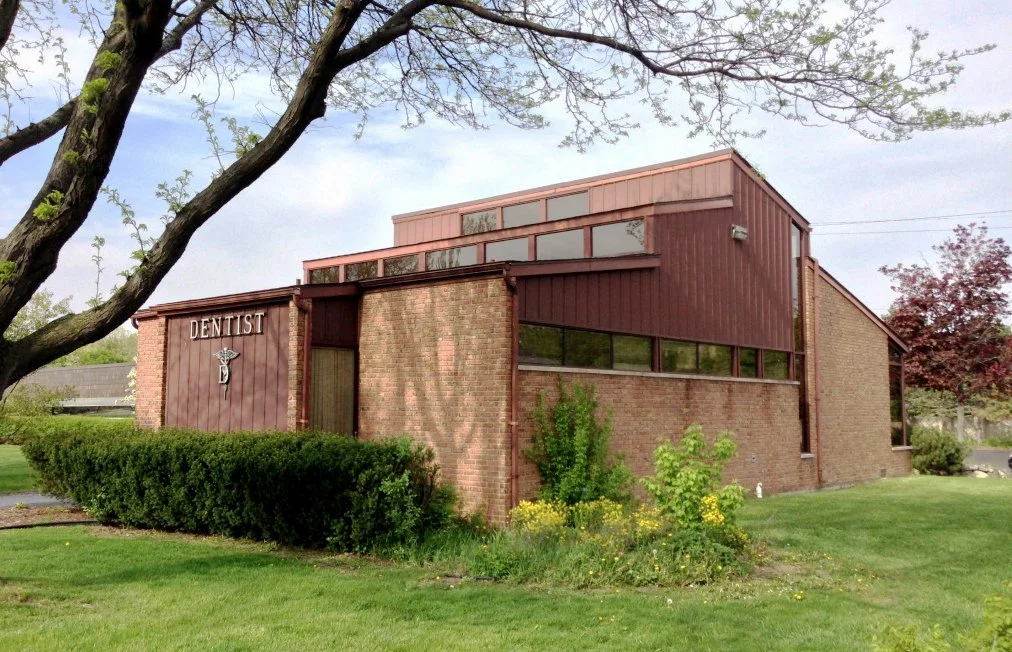
The existing ramp from parking lot to front door was composed of brick pavers, arranged in a circular walkway layout. The ramp did not meet Michigan Barrier Free requirements for the following reasons:
No handrail
Ramp exceded 1:12 rise ratio
-
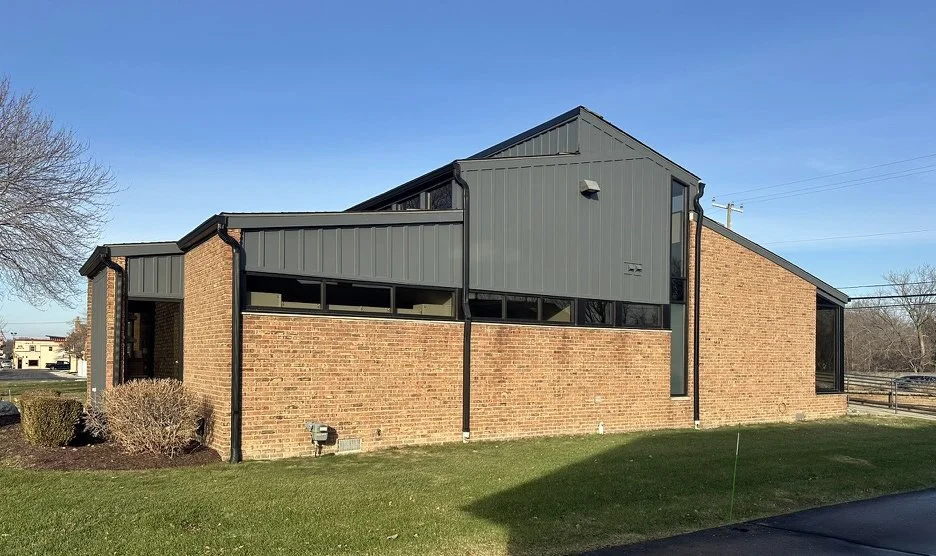
Underground storm water detention was modified to above ground rain gardens to significantly reduce site construction costs by $40,000.
-
Underground storm water detention was modified to above ground rain gardens to significantly reduce site construction costs by $40,000.
-
The existing ramp from parking lot to front door was composed of brick pavers, arranged in a circular walkway layout. The ramp did not meet Michigan Barrier Free requirements for the following reasons:
No handrail
Ramp exceded 1:12 rise ratio
-
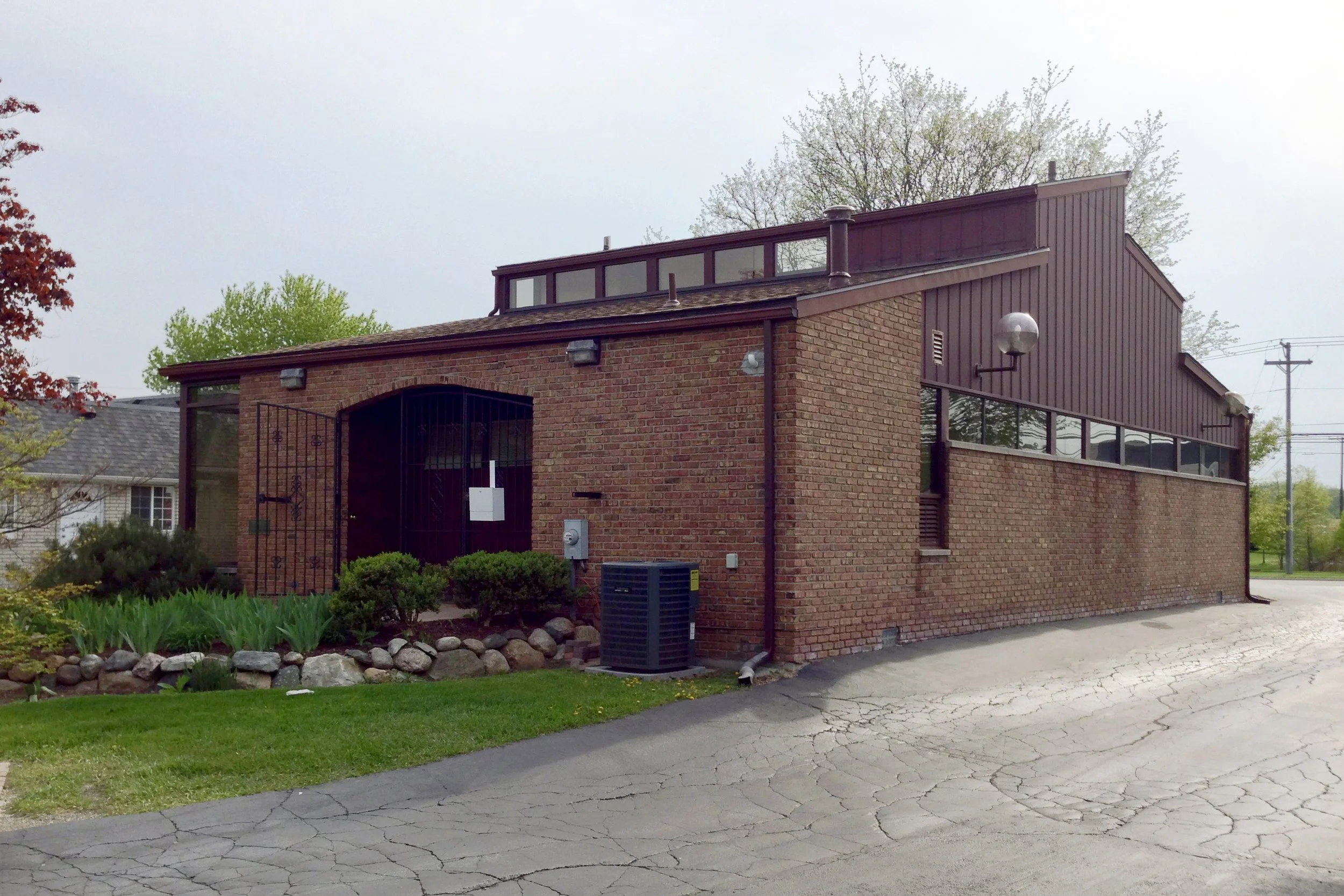
The existing ramp from parking lot to front door was composed of brick pavers, arranged in a circular walkway layout. The ramp did not meet Michigan Barrier Free requirements for the following reasons:
No handrail
Ramp exceded 1:12 rise ratio
-
The existing ramp from parking lot to front door was composed of brick pavers, arranged in a circular walkway layout. The ramp did not meet Michigan Barrier Free requirements for the following reasons:
No handrail
Ramp exceded 1:12 rise ratio
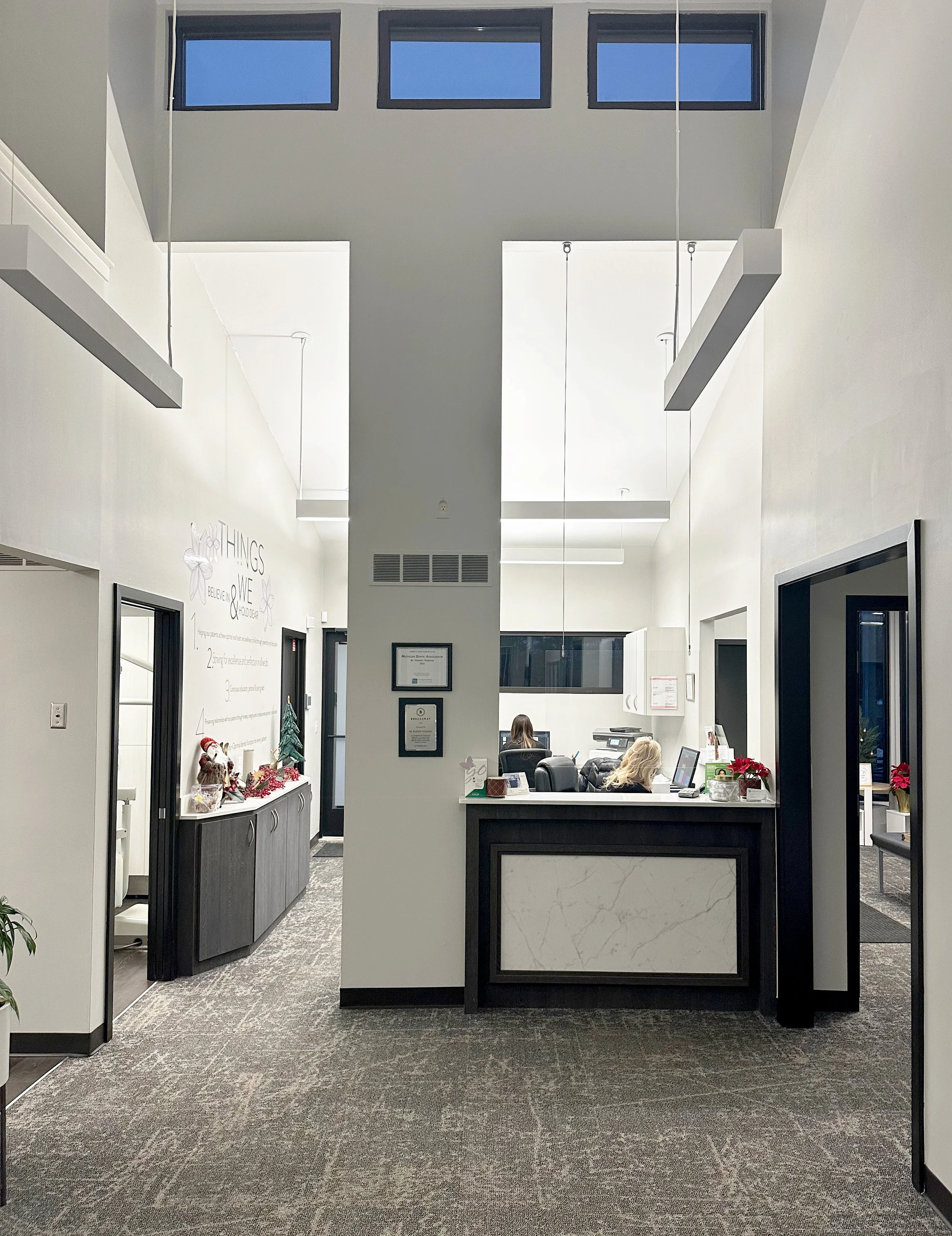
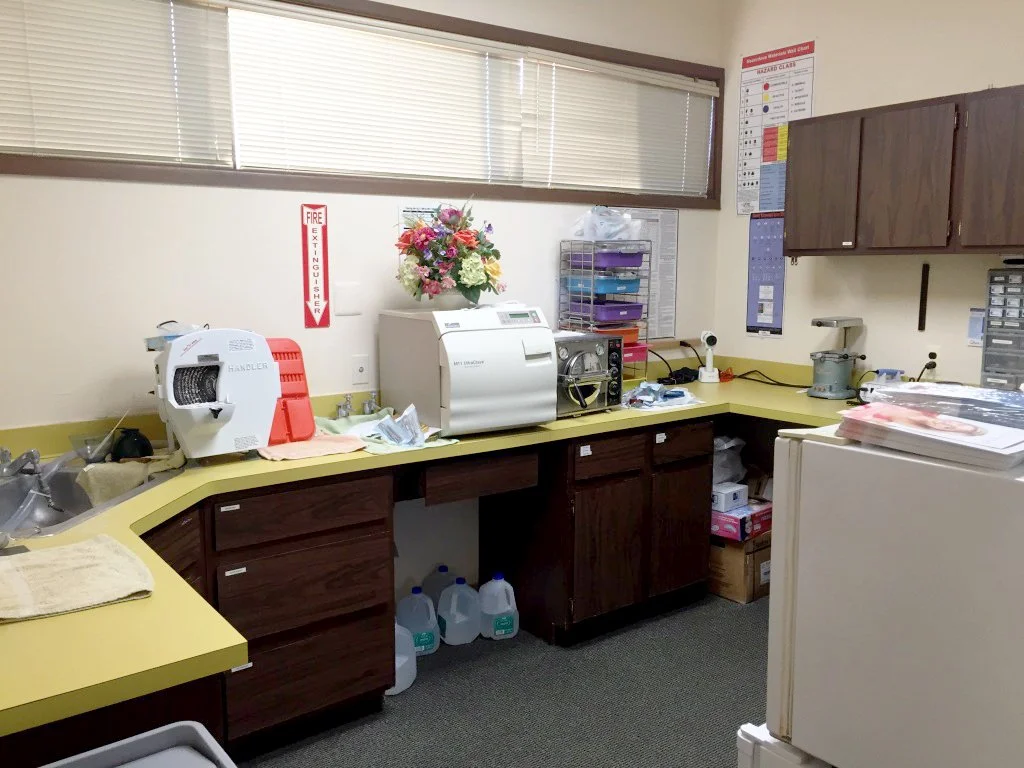
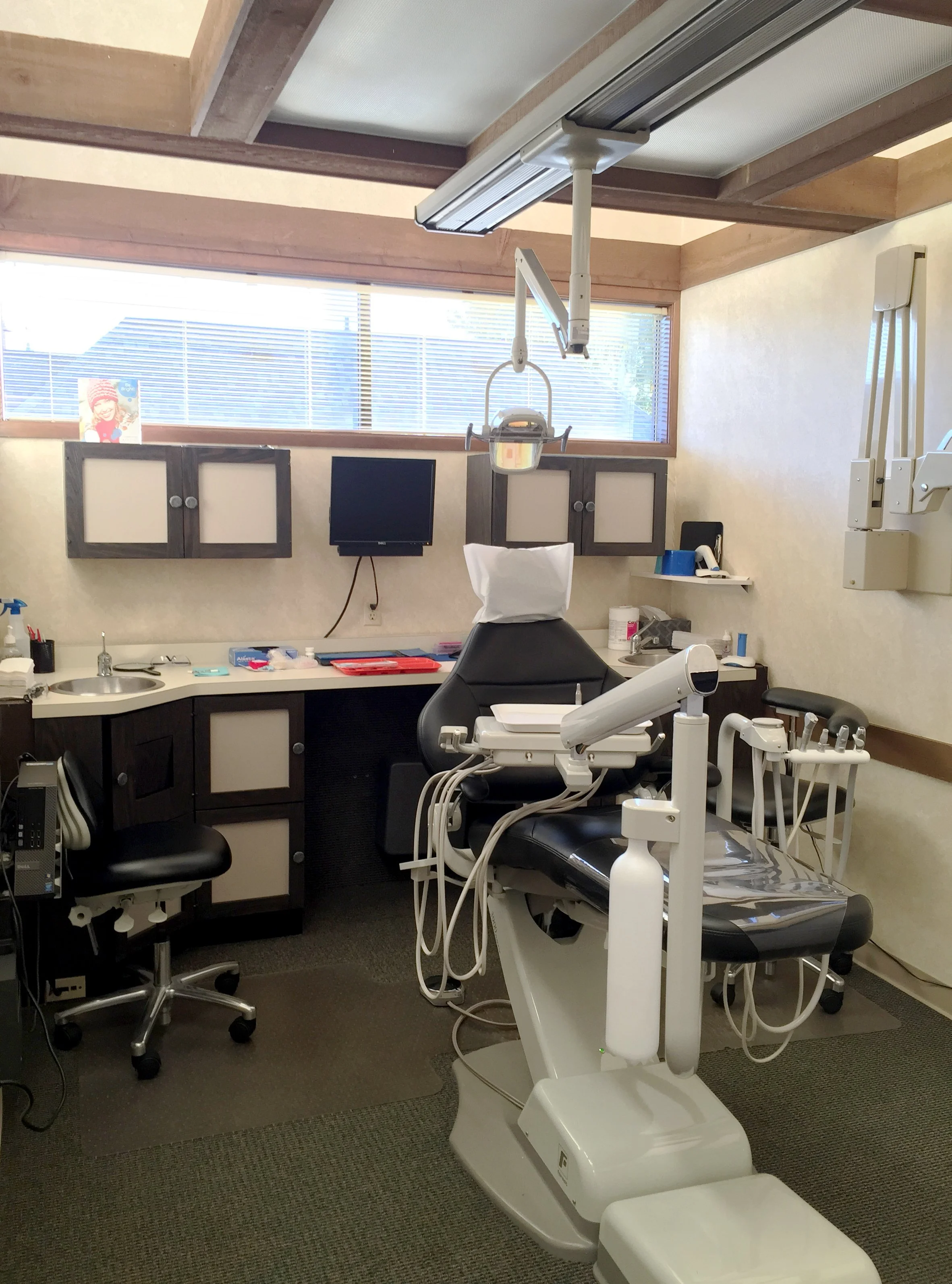
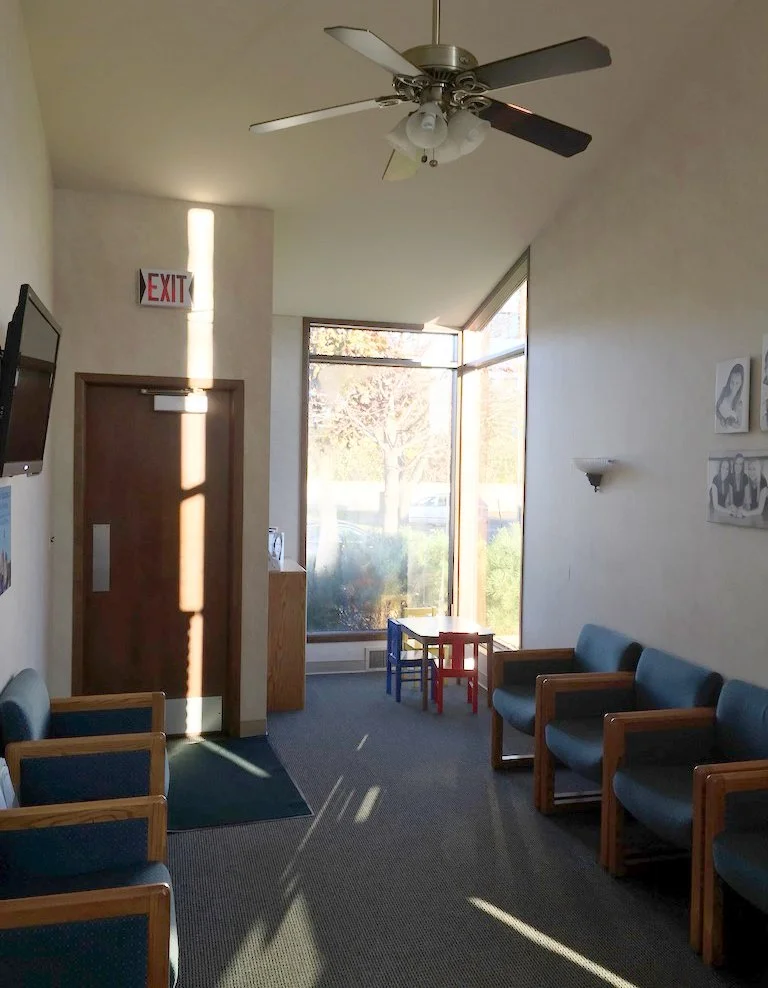
Interior Transformation Before and After – Patient & Staff Environments
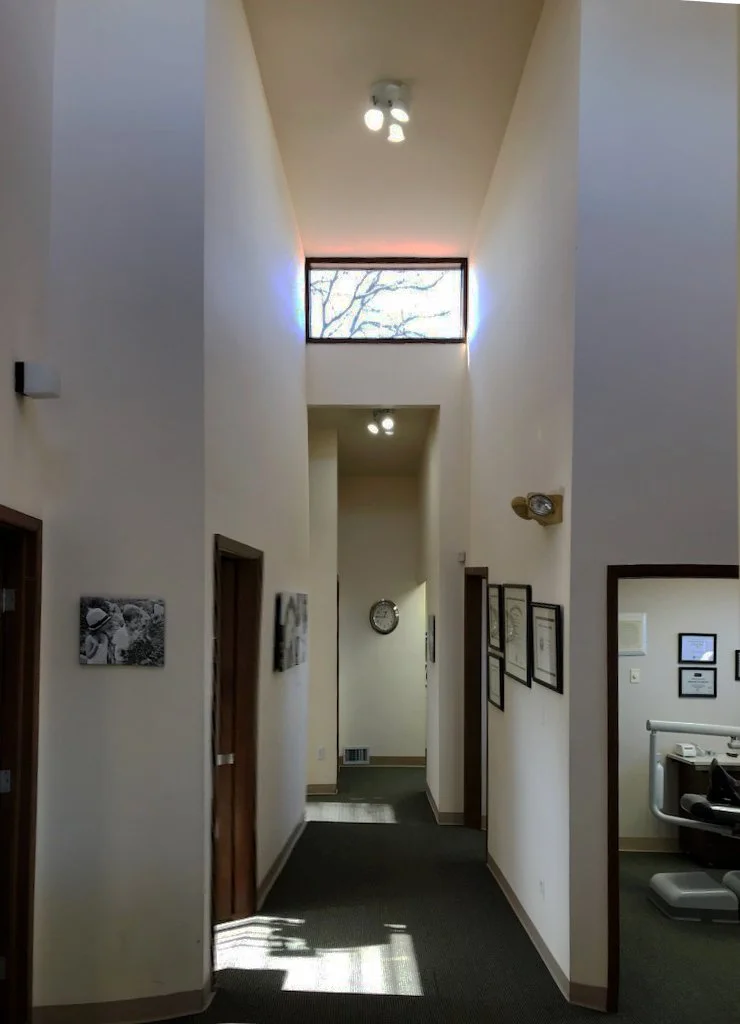
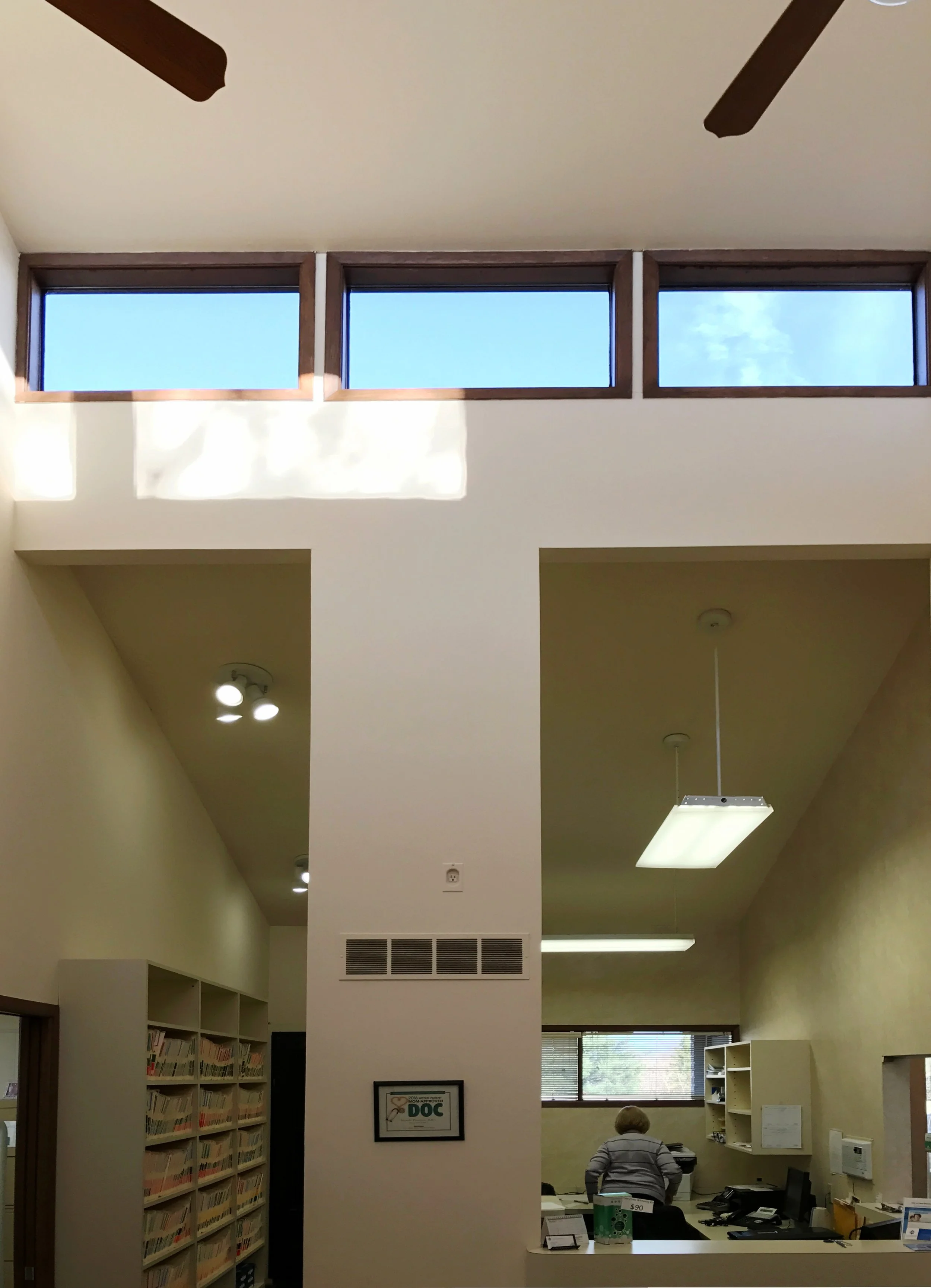
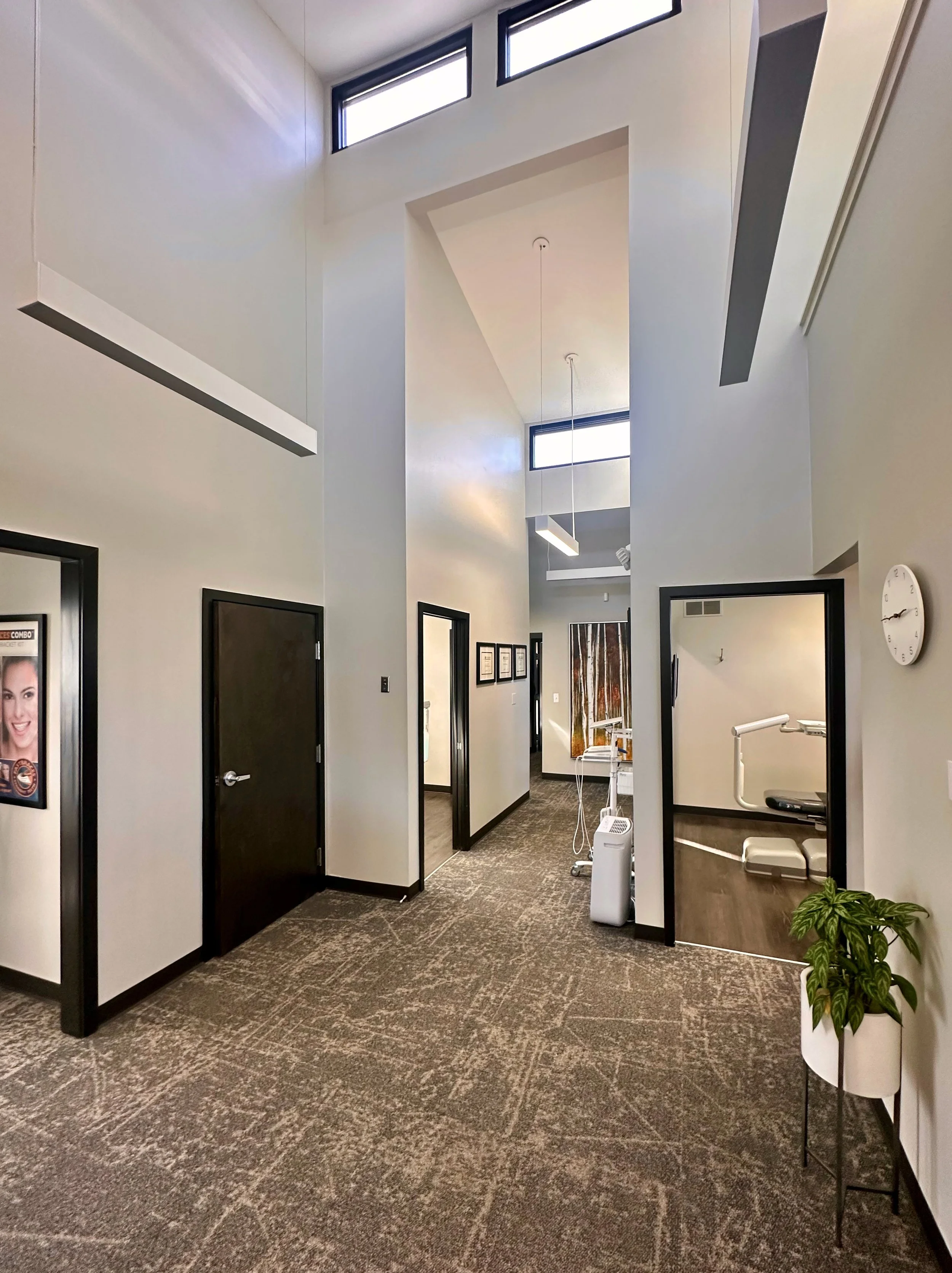
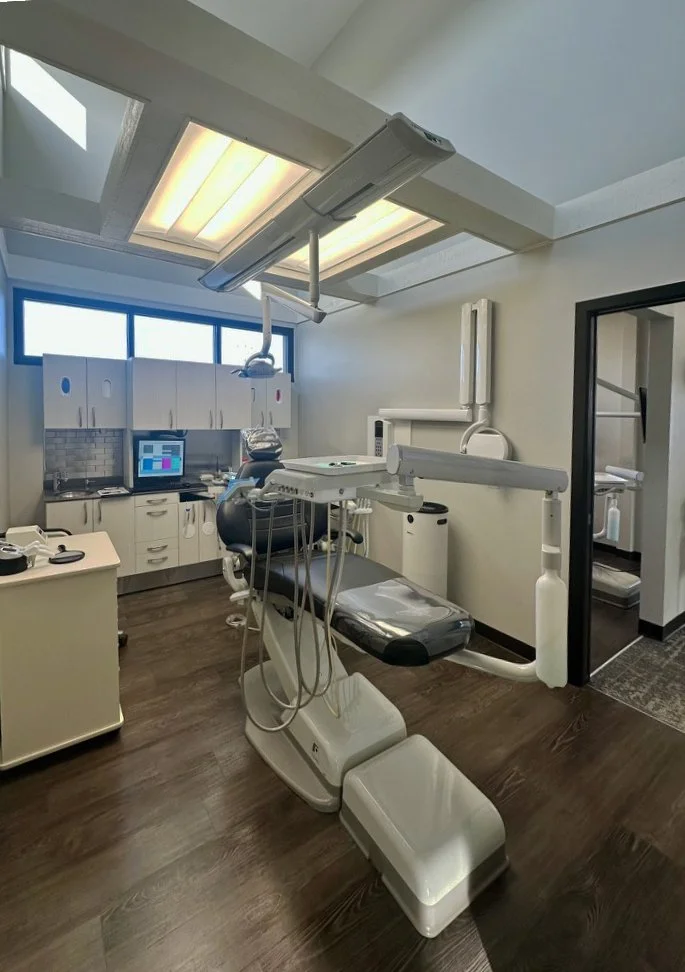
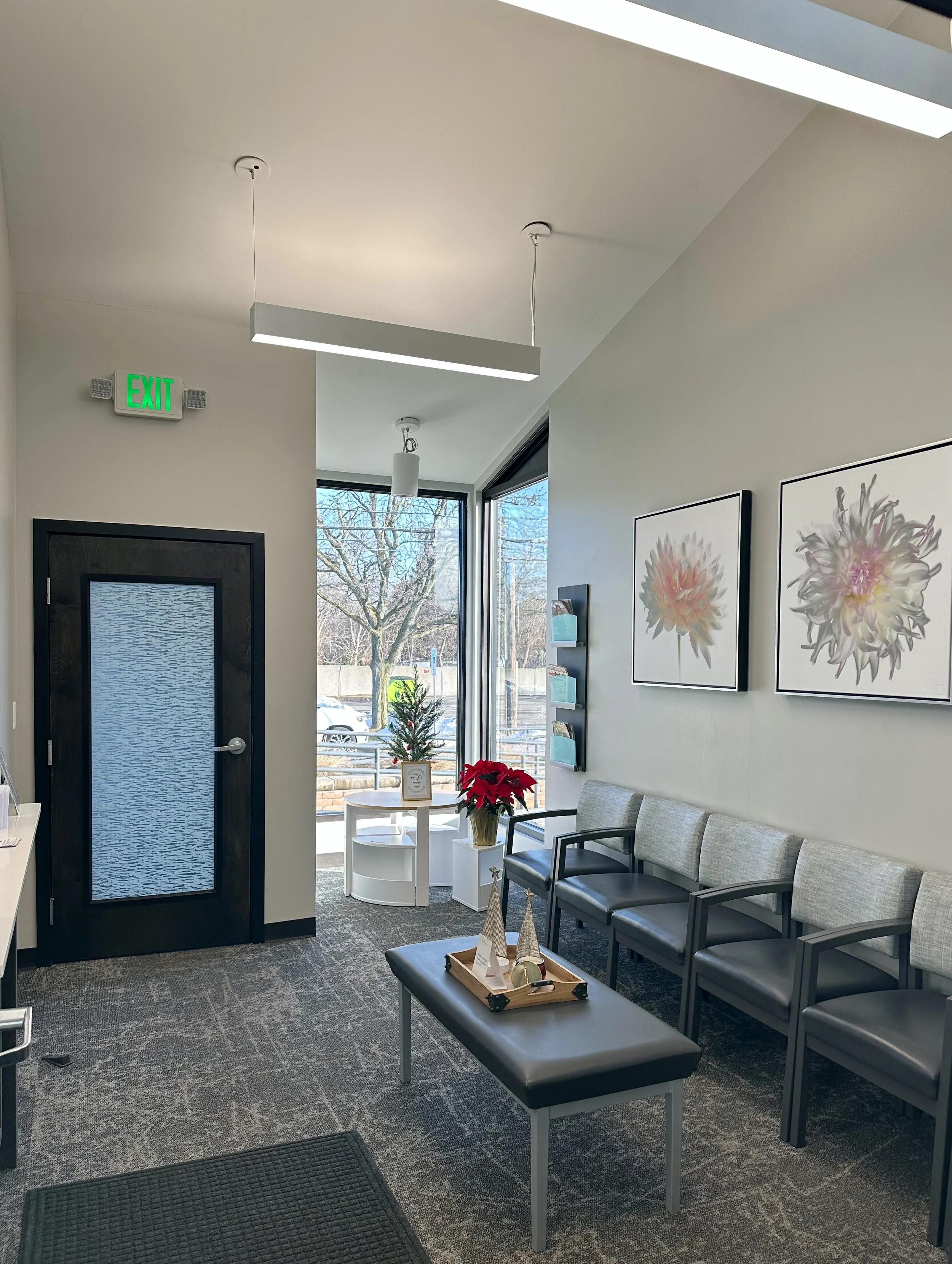
The interior renovation focused on improving clinical flow, natural light, and overall spatial experience while working within the owner’s defined parameters.
Important Note on Finishes: Parabola A+D provided full architectural design, layout coordination, lighting strategy, and exterior/interior elevations. Interior finishes and final material selections were completed by the contractor’s interior designer and were not part of our scope of work. As a result, the built interiors reflect a different aesthetic direction than the one shown in our original design renderings.
Despite these divided responsibilities, the renovation delivered meaningful improvements:
Brighter, more open corridors with enhanced daylight
Updated operatories with improved functionality and patient comfort
Modernized reception and waiting areas that support a calmer, more professional atmosphere
These changes contributed to smoother daily operations and a more welcoming environment for patients and staff.
-
The existing ramp from parking lot to front door was composed of brick pavers, arranged in a circular walkway layout. The ramp did not meet Michigan Barrier Free requirements for the following reasons:
No handrail
Ramp exceded 1:12 rise ratio
-
The existing ramp from parking lot to front door was composed of brick pavers, arranged in a circular walkway layout. The ramp did not meet Michigan Barrier Free requirements for the following reasons:
No handrail
Ramp exceded 1:12 rise ratio
-
The existing ramp from parking lot to front door was composed of brick pavers, arranged in a circular walkway layout. The ramp did not meet Michigan Barrier Free requirements for the following reasons:
No handrail
Ramp exceded 1:12 rise ratio
-
The existing ramp from parking lot to front door was composed of brick pavers, arranged in a circular walkway layout. The ramp did not meet Michigan Barrier Free requirements for the following reasons:
No handrail
Ramp exceded 1:12 rise ratio
-
The existing ramp from parking lot to front door was composed of brick pavers, arranged in a circular walkway layout. The ramp did not meet Michigan Barrier Free requirements for the following reasons:
No handrail
Ramp exceded 1:12 rise ratio
-
The existing ramp from parking lot to front door was composed of brick pavers, arranged in a circular walkway layout. The ramp did not meet Michigan Barrier Free requirements for the following reasons:
No handrail
Ramp exceded 1:12 rise ratio
Conceptual Design - Interior & Exterior
Proposed Building Section – Biophilic Planter Strategy
This cutaway rendering shows our neuroscience-informed approach: strategically placed biophilic planters at key transitions to create calm, healing environments that help lower patient cortisol and blood pressure through natural visual connection, gentle acoustics, and multisensory cues.
-
Project Objective
Integrate biophilic planters at key interior and exterior transitions to reduce patient stress (cortisol and blood pressure) through multisensory, nature-based design.
Create beautiful, easily maintainable planters that serve as visual focal points while improving acoustics, humidity, and air quality.
Design Concept
Strategy: Layered planting, natural materials, and subtle water features engage fractal patterns, gentle sound, and mild humidity — all proven to produce calming physiological responses.
Placement: Planters positioned at primary circulation paths and near operatories to maximize visual connection with nature and daylight.
Expected Physiological Impacts
Visual contact with vegetation and daylight has been shown to reduce cortisol levels and lower systolic blood pressure, supporting both patient comfort and staff well-being.
-
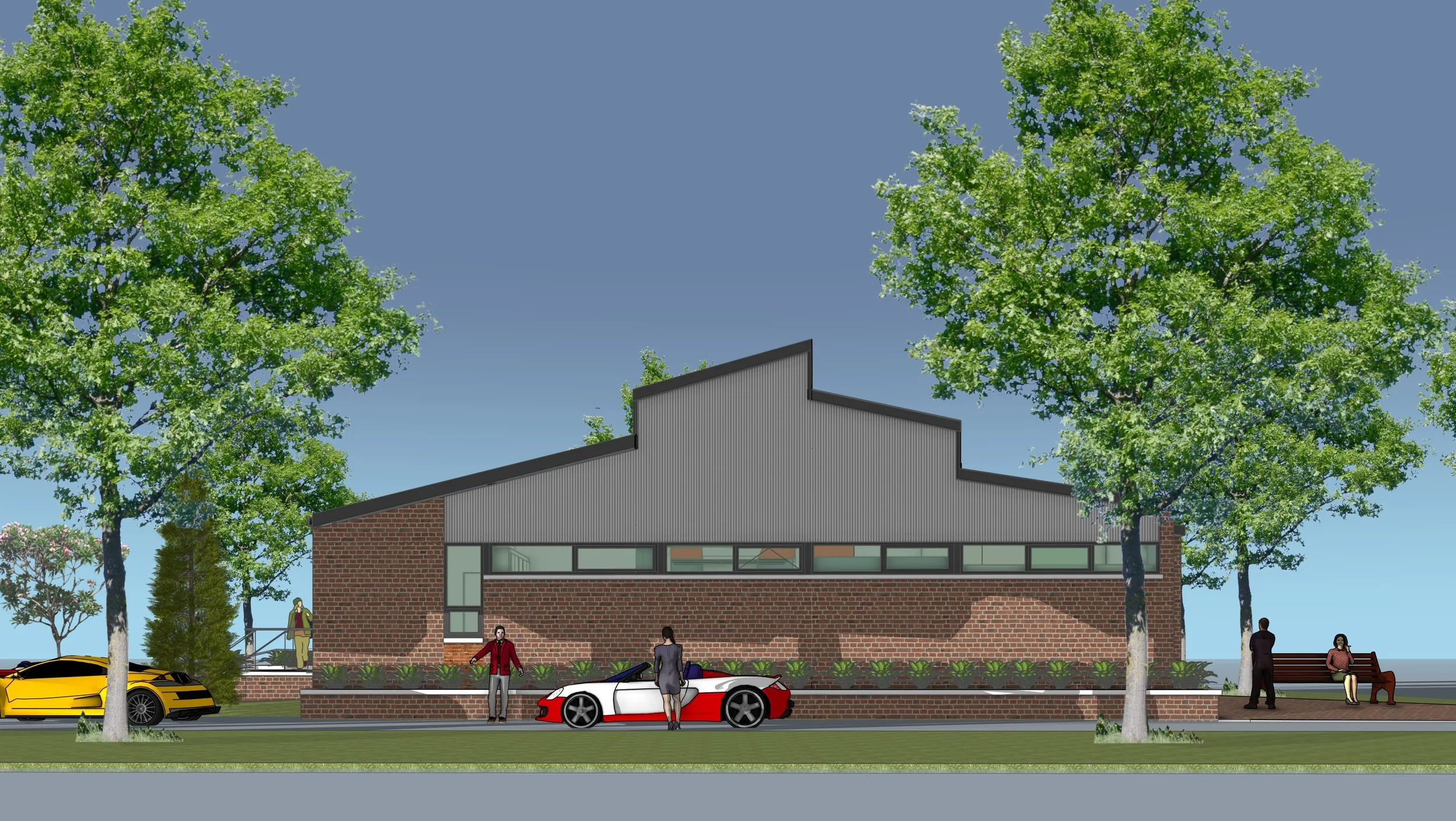
New Kawneer Operable Window Units with Light Green Glass to complement existing Brick veneer and new vertically oriented metal wall panel
Proposed North Elevation – Design Intent
This rendering shows our proposed design for the north elevation. While not fully realized in the final construction, it illustrates the vision for a softened, more human-scaled façade that integrates biophilic planters, enhanced daylighting, and contemporary materials to create a calmer, more welcoming environment for patients and staff.
-
Proposed North Elevation Design Intent
Introduce continuous planters along the north elevation to create a landscaped buffer between the building and the adjacent paved drive. These planters were intended to provide physical separation, soften the interface with vehicular circulation, and contribute to microclimate moderation and stormwater capture.
Replace existing fixed glazing with Kawneer operable storefront windows to increase access to natural daylighting and provide occupant-controlled ventilation for improved interior comfort and fresh air exchange.
Apply vertically oriented metal siding on primary field areas to visually lighten the massing and introduce a contemporary vertical rhythm.
Overall Intent: Create a more human-scaled, approachable north elevation that improves daylighting, occupant comfort, and visual integration with the brick facades through the combined use of planters, operable storefront windows, and vertically oriented metal siding.